Two Kinds of Agent Memory: OKF Bundles vs. Codebase Knowledge Graphs
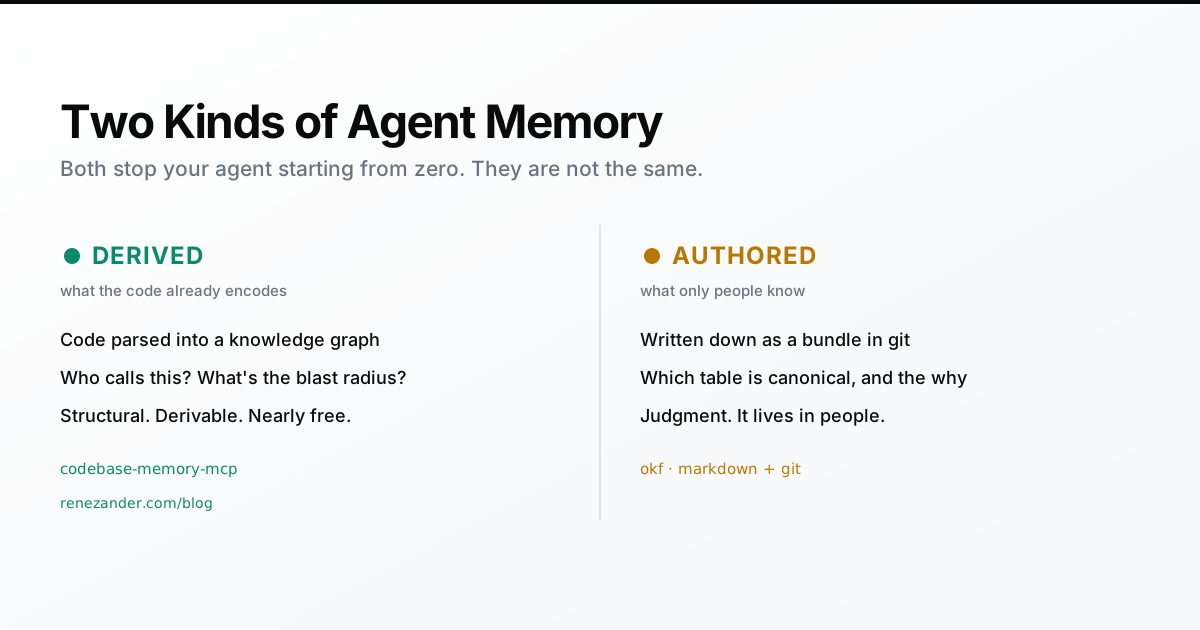
Half of the memory you are about to hand-write for your agent is already sitting in your codebase. The other half, no indexer will ever find.
Both gaps feel identical from the agent’s side. It opens every session knowing nothing about your systems, so the instinct is to give it one memory store and move on. The two gaps are not the same. One is derivable. One is not. The tool that closes the first does nothing for the second.
Watch an agent open a repo it has seen ten times. It greps. It reads the same forty files. It rebuilds the same call graph it built yesterday, spending a few hundred thousand tokens to relearn what the code already states. Then it asks you which database is the source of truth, because the code does not say.
The part the code already knows
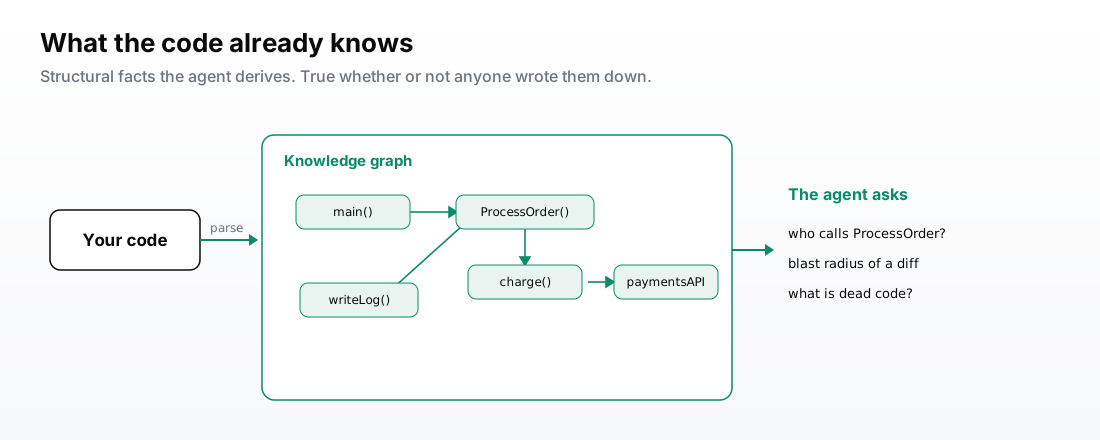
Most of what an agent relearns is structural. Who calls ProcessOrder. What breaks if you change this signature. Which routes are dead. That knowledge is true whether or not anyone wrote it down, because it is encoded in the source.
So derive it. A code knowledge graph parses the repo once and answers structural questions from a persistent index. The one I have been testing, codebase-memory-mcp, builds that graph with tree-sitter across 158 languages and serves it to any agent over MCP. The agent stops grepping and starts querying: trace the callers of a function, map the blast radius of a diff, list dead code. Things grep cannot answer at any speed. I run it behind a small trust gate, so an agent only queries repos I have vetted: pi-codegraph.
The token savings are real, but read the measured number. The project’s preprint reports roughly 10x fewer tokens and 83% answer quality across 31 repositories. The README’s “99%” comes from a hand-picked query set. The honest figure is still a strong figure. You do not need to inflate it.
The part no graph will find
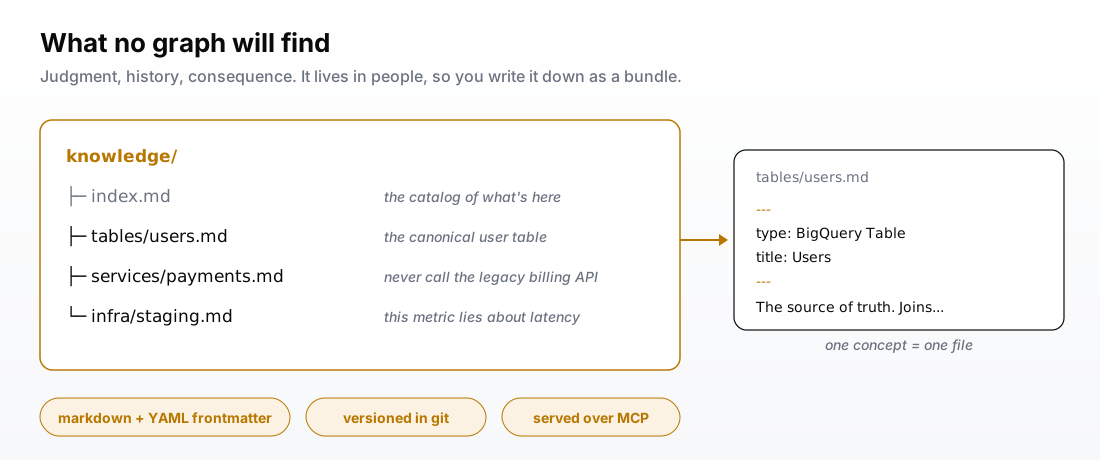
Now the half that is not in any AST. Which of three users tables is canonical. Why the payments service must never touch the legacy billing API. That the staging cluster reports latency it does not actually have. None of this is structure. It is judgment, history, and consequence. It lives in people, and people leave.
OKF is the format for writing that down. Open Knowledge Format, an open spec Google published in June 2026, is a directory of markdown files with YAML frontmatter. One concept per file. A folder of concepts is a bundle. You version it in git, review it in pull requests, and serve it to any agent over MCP as resources. It is boring on purpose. If you can cat a file, you can read it. If you can git clone, you can ship it. The reader and curator I point my agents at, with the same trust gate, is pi-okf.
The mistake is using one for the other
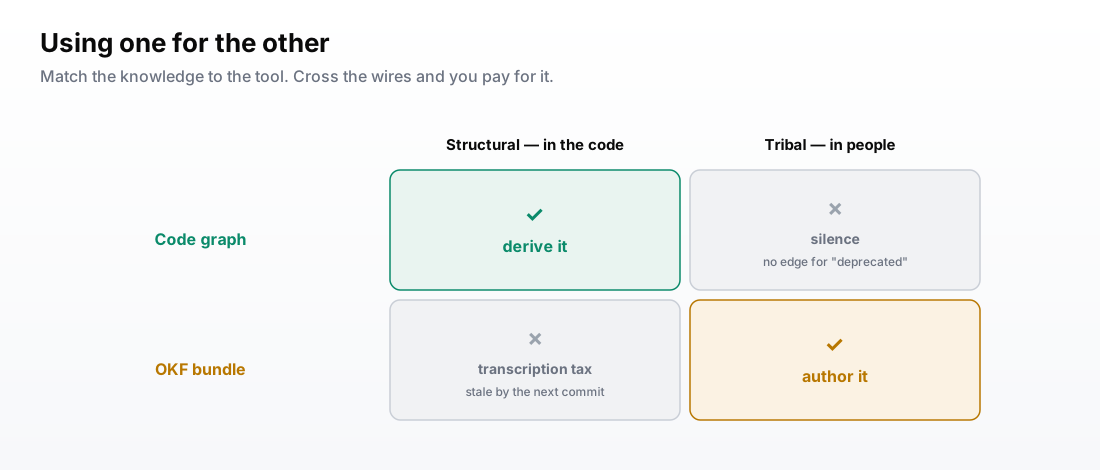
Point a graph indexer at tribal knowledge and you get silence, because there is no edge in the AST for “deprecated, do not call.” Hand-write an OKF concept for every function’s callers and you are transcribing what the graph returns in a millisecond, by hand, and it is wrong by the next commit.
So stop asking which memory tool to install. Ask whether the knowledge your agent lacks is authored-only or derivable. Get that backwards and you pay twice: once to write down what the code already states, again when your hand-written copy goes stale and quietly misleads the agent you built it for.
The part that changes every week
Code structure and tribal knowledge both hold until someone edits them. A third kind does not: the operational state of customers, projects and decisions, which changes every week and arrives through chat, tickets and CRM. Neither a code graph nor an OKF bundle records when something stopped being true.
That kind belongs in a temporal knowledge graph, where every fact is an edge with a validity window and a newer fact closes the older one, each traceable to the message it came from. It is the memory behind a context layer for AI agents, and the one where a person should approve what the agent writes.
Which one for which team
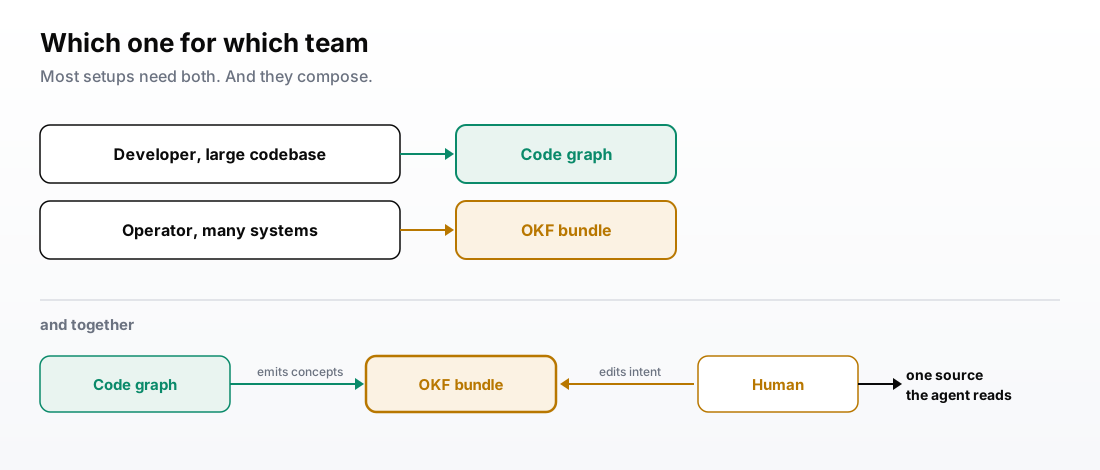
A developer dropped into a large or unfamiliar codebase needs derived knowledge. The questions are structural and the code holds the answers. Reach for the graph.
An operator whose agent reaches across many systems, the MCP-heavy setup with data platforms, internal APIs, and ops runbooks, needs authored knowledge. The value sits between the systems, not inside any one of them, and a single-repo parser is blind to it. Reach for OKF bundles.
Most real setups need both, and the two compose better than either alone. Let an enrichment agent walk the code graph and emit OKF concepts for the architecture it can derive. Then a human edits in the parts the graph cannot see: the canonical, the why, the never. The graph keeps the bundle honest about structure. The human keeps it honest about intent.
Derive what the code knows. Author what only people do. One half is nearly free. The other is the actual job.
So before you bolt another memory server onto your agent, sort the knowledge into the two piles first. That split is the first thing I set up when I build a production agent. Two questions decide it:
- What does your agent keep relearning that the code already states?
- What does it keep guessing because nobody ever wrote it down?
Frequently asked questions
What is the difference between OKF and a codebase knowledge graph?
OKF (Open Knowledge Format) is human-authored knowledge: markdown files in git that capture what only people know, like which database is canonical. A codebase knowledge graph is machine-derived: a tool parses your code and reconstructs call chains and dependencies automatically. One captures intent, the other captures structure.
When should I use codebase-memory-mcp instead of writing knowledge files?
Use a code knowledge graph when the answer is already in the code: who calls a function, the blast radius of a change, dead code, cross-service routes. Hand-writing those is transcription work that goes stale on the next commit. Let the graph derive them and query it over MCP.
When is hand-authored OKF the right choice?
When the knowledge lives between systems or in people's heads, not inside one repo. Which of three user tables is the source of truth, why a service must never call a legacy API, that a staging metric lies. No parser finds that. You author it once and version it in git.
Do OKF and codebase knowledge graphs work together?
Yes. Let an enrichment agent walk the code graph and emit OKF concept files for the architecture it can derive, then have a human edit in the parts the graph cannot see. Derived knowledge seeds the bundle, authored knowledge corrects it. The result is one git-versioned source both humans and agents read.
Does codebase-memory-mcp really cut token usage by 99%?
Treat the headline figure as marketing. The project's own preprint, evaluated across 31 real repositories, reports roughly 10x fewer tokens, 2.1x fewer tool calls, and 83% answer quality versus file-by-file exploration. Strong numbers, but cite the measured ones, not the hand-picked ones.
Which agent memory handles facts that change every week?
Neither a code graph nor an OKF bundle. Customer state, owners and decisions change weekly and arrive through chat, tickets and CRM. They belong in a temporal knowledge graph, where every fact carries a validity window and a newer fact closes the older one, each traceable to its source.
Before you bolt another memory server onto your agent, sort your knowledge into the two piles first. The agent-architecture playbook walks the same authored-versus-derived split for a production setup.
Your agents answer from whatever the retriever finds, and too often that is last quarter's truth. I build the context layer they answer and act from: a temporal knowledge graph that keeps every fact with its source and the time it held, reads with each person's own permissions, and writes nothing without a person's approval. On your own tenant, billed by the hour, step by step.